
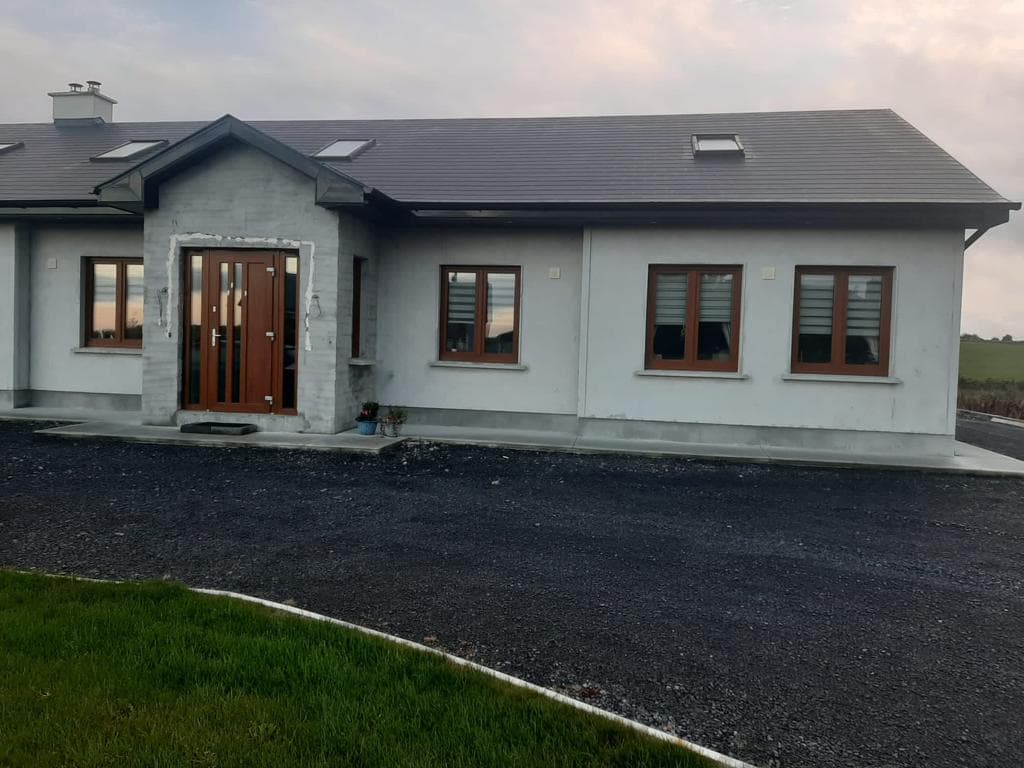
"Turnkey" is one of the most used and least defined words in Irish house building. Taken literally it means the house is finished to the point where you turn the key and move in. In practice, two builders can both quote a turnkey new build in Galway and mean noticeably different scopes — and the gap between them is usually worth tens of thousands of euro. Knowing where that line normally falls makes quotes comparable and stops the budget drifting halfway through the job.
What is almost always included
At the core of any turnkey quote is the house itself, built and finished to a habitable standard. That generally covers foundations and rising walls, block laying and structural work, roof structure and covering, external render or finish, insulation and airtightness detailing, windows and external doors, first and second fix plumbing and electrics, heating system, internal walls, plastering, internal doors, skirting and architrave, painting, and the sanitaryware in bathrooms.
It should also include the compliance side, which is easy to overlook when comparing prices: engineer's inspections, the BER assessment and certificate, building control paperwork including the commencement notice, and the certificates of compliance you will need when the house is sold or mortgaged.
What often sits outside it
This is where quotes diverge. Items commonly excluded, or included only as a provisional sum, are the kitchen and utility units, wardrobes and built-in storage, floor coverings, tiling allowances, light fittings, the driveway and paving, landscaping, boundary walls and fencing, and the site connections for water, ESB and wastewater.
Site works in particular deserve their own conversation. On a rural site outside Galway, the wastewater treatment system, percolation area, site entrance, sightlines and a long service run can add a substantial sum that has nothing to do with the house design. Two quotes that look far apart on paper are sometimes just drawing the site-works line in different places.
Provisional sums are not a problem in themselves — they are a normal way to handle choices you have not made yet. They only become a problem when they are set unrealistically low. If a kitchen allowance looks light for the size of the room, ask what it is based on.
The windows and doors decision comes early
Homeowners often assume glazing is a late-stage choice. It is not. Window and door sizes are fixed at design stage because they affect the structural openings, lintels and, on larger spans, the steel. Glazing performance also feeds directly into the energy calculations behind the BER and the Part L compliance the house has to meet, so the specification cannot be swapped casually near the end.
Frame material, glazing spec and door style are all worth deciding deliberately rather than defaulting to whatever is in the base quote. Our uPVC vs aluminium vs aluclad comparison covers where each material earns its place, and if the design includes a large rear opening, the patio doors and sliding systems guide is a useful starting point. On new builds these are usually easier decisions than on a retrofit, because nothing has to be worked around.
Questions that make quotes comparable
Before comparing prices, ask each builder the same short list: is the kitchen included or a provisional sum, and how much; are floor coverings and tiling in; are site connections and the wastewater system included; what window and door specification is priced, including frame material, glazing and U-values; is the driveway and any boundary work in scope; and which certificates and assessments are covered.
Ask what the payment stages are and what triggers each one. And ask what happens if ground conditions on the site turn out worse than assumed, because that is the most common source of unexpected cost on a new build.
A realistic sequence
A new build tends to run smoothest when the order is: site and planning first, then design and specification, then a properly detailed quote, then construction. The temptation is to compress the middle — to get on site quickly and settle the details later. Decisions taken late almost always cost more than the same decisions taken early, and the ones that touch structure or energy compliance can be genuinely expensive to change once block work is up.
KRB Construction & Windows Ltd builds new homes across Galway City and County Galway and the surrounding counties, and supplies and fits the windows and doors on them. Recent projects are in the new builds gallery. If you are planning a new build and want a clear breakdown of what is in and out of scope, get in touch or request a quote with the site location and, if you have them, your drawings.
Underfloor Heating in Galway: Retrofit vs New Build
Older postHouse Extensions in Galway: Planning Permission and Building Regulations Basics
Planning a Similar Project in Galway?
KRB Construction & Windows can help with windows, doors, renovations, attic conversions and practical construction advice for your home.