
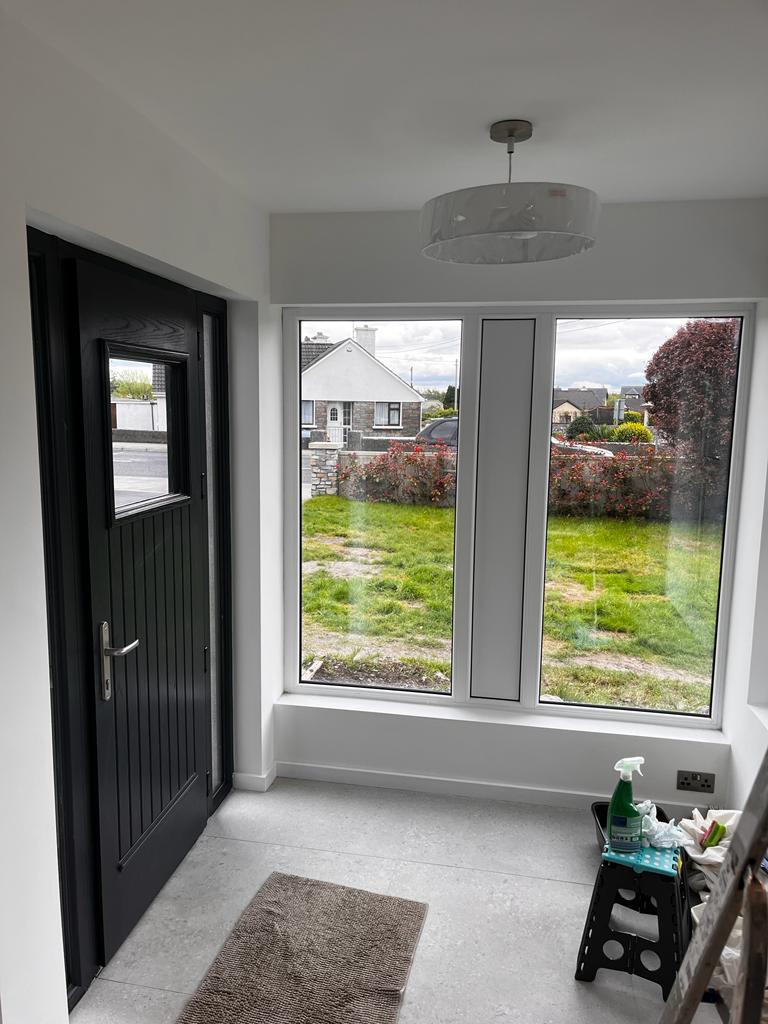
The window itself is only part of a replacement. Once the old frames come out, the edges of the opening, called the reveals, and the sill underneath are exposed, and how they are finished decides whether the job looks good for years. Here is what to expect around new windows in a Galway home, and what to agree before work starts.
What are reveals, sills and cills?
- Reveals are the sides and head of the opening, where the wall returns in to meet the frame.
- The external cill is the sloped or flat ledge outside that sheds rainwater away from the wall. On new uPVC and aluminium windows it is usually part of the frame (a cill or sub-cill section).
- The internal sill or window board is the shelf inside, usually timber, MDF, PVC or stone.
Why disturbance is normal
Frames are fixed through into the wall and sealed with insulation and sealant. Removing old frames, especially older timber ones or frames that were plastered over, will often crack or lift plaster at the edges. A careful fitter keeps this to a minimum, but it is realistic to expect some making good. Ask in the quote what is included so there are no surprises.
Internal finishing options
Plaster repair. Small gaps and cracks are filled and skimmed. Where a new frame is slightly narrower or wider than the old one, the reveal may need a strip of new plaster or a plaster-board return.
Window boards. Replacing the internal board is the best time to freshen up the room. Common choices:
- PVC boards are low-maintenance, waterproof and match the frame.
- MDF or timber boards can be painted or stained to match the room, but need sealing in damp areas such as kitchens and bathrooms.
- Stone or tile sills suit some period or kitchen designs but are heavier and need proper support.
Trims and silicone. Where plaster meets the frame, a neat bead of paintable sealant or a small trim covers the joint and stops draughts finding a path. Colour should be chosen to match the frame or the wall.
External finishing
Outside, the junction between frame and wall needs a weatherproof seal, and any render or pointing disturbed during the fit should be repaired. Check that the cill projects slightly past the wall so water drips clear rather than running down the face of the masonry. In exposed western locations, good external detailing matters even more; our guide to windows and doors in coastal Galway explains why.
Who does what?
Be clear before work starts about who handles each stage:
- Fitter: removal, fitting, insulation and sealing, and usually basic making good.
- Plasterer or builder: larger plaster repairs, new returns or damaged masonry.
- You or a decorator: painting, staining and final touches.
If a full renovation is planned, finishing is easy to coordinate in the same programme; see our energy-efficient renovation guide.
A simple snagging checklist
When the windows are in, walk round each room and check:
- Frames are level, with even gaps and no visible daylight.
- Opening sashes close smoothly and handles lock firmly.
- Glass is clean and free from scratches or marks inside the sealed unit.
- Sealant lines are straight, complete and not smeared.
- Trickle vents are fitted and working where required (see our guide to trickle vents and Part F).
- Plaster, boards and external finishes are tidy and all debris is gone.
Report any issues straight away in writing so they can be put right while the fitters are still familiar with the job.
Keeping it looking good
Wipe boards and seals with mild soapy water, keep silicone joints free from mould by ventilating well, and re-seal any joints that crack. For a simple yearly routine, see our seasonal care guide.
Planning your window replacement
If you are replacing windows in Galway City or County, request a quote and we will tell you exactly what finishing is included, or get in touch with questions. You can read more about our windows and doors service too.
Planning a Similar Project in Galway?
KRB Construction & Windows can help with windows, doors, renovations, attic conversions and practical construction advice for your home.