
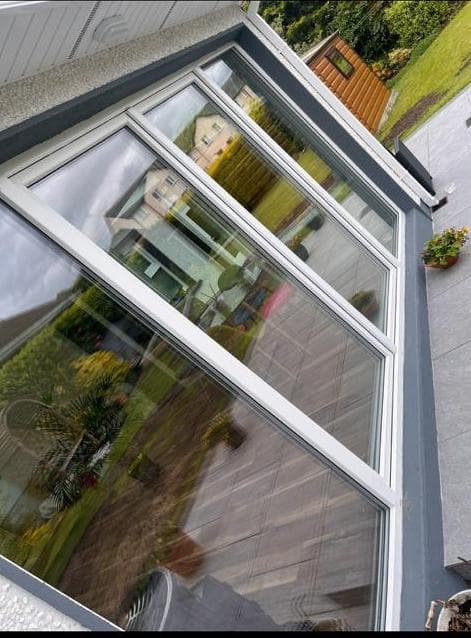
As the evenings turn colder, the calls about condensation start. Someone wakes up to streaming bedroom windows, or notices a cloudy patch that will not wipe away, and wants to know if the windows are failing. Sometimes they are. More often the windows are doing exactly what they should and the moisture is coming from somewhere else. The key is working out where the condensation is, because the three types have completely different causes and fixes.
Why condensation forms at all
Warm air holds more water vapour than cold air. When moist indoor air touches a surface colder than its dew point, the vapour turns back into water on that surface. In most homes the glass is the coldest surface in the room, so that is where it shows first.
A normal household puts a surprising amount of moisture into the air every day through cooking, showers, kettles, breathing and, in Ireland especially, drying clothes indoors. Galway's mild, damp climate means outdoor air is rarely dry either, so opening a window does not always clear the problem as quickly as people expect.
Type 1: condensation on the inside of the glass
This is the most common type and, on its own, it is not a window fault. It means the air in the room is humid and the glass surface is cold enough to reach dew point. You will usually see it:
- On bedroom windows first thing in the morning, after a night of breathing with the door closed.
- In kitchens and bathrooms during and after cooking or showering.
- Along the bottom edge of the glass, where the surface is coldest.
- More on older double glazing, single glazing or aluminium frames with no thermal break.
The fix is mostly about moisture and airflow: open trickle vents and keep them open, run kitchen and bathroom extractor fans long enough to actually clear the steam, avoid drying clothes on radiators in closed rooms, and keep a low, steady level of background heat rather than letting rooms go very cold overnight. A cheap hygrometer helps; indoor relative humidity that regularly sits well above 60% is a sign the house needs more ventilation rather than new windows.
Where newer windows do help is surface temperature. A modern sealed unit with low-emissivity glass, argon fill and warm-edge spacers keeps the inner pane noticeably warmer than old units, so it reaches dew point far less often. That is also why triple glazing shows even less internal condensation. But a very airtight house with blocked vents will still find somewhere for the moisture to settle, often as mould in wardrobe corners or on window reveals instead.
Type 2: condensation between the panes
This is the one that genuinely indicates a fault. A double- or triple-glazed unit is sealed at the factory, with a dry gas and a desiccant inside the spacer bar to absorb any trace moisture. Over time, and faster on exposed elevations that take a lot of sun and rain, the edge seal can break down. Humid air gets in, the desiccant saturates, and you get a misted, milky look that no amount of wiping will touch, because it is inside the glass.
Once a sealed unit has failed it will not recover. The insulating gas has escaped, the thermal performance has dropped, and the staining usually gets worse each season.
The good news is that a failed unit does not always mean a new window. If the frame is sound, square, and the hardware still works, the sealed unit can often be replaced on its own, glazed into the existing frame. That is typically a fraction of the cost of a full window. If the frames are twenty-plus years old and several units are going at once, along with dropped sashes, stiff handles or worn seals, full replacement is usually the better long-term spend.
Type 3: condensation on the outside of the glass
Many people are surprised to find dew on the outside of new windows on a clear, still morning. This is actually a sign of very good glazing. The unit is insulating so well that little heat from the house reaches the outer pane, so it cools to the same temperature as the outdoor air and dew forms on it, just as it does on a car windscreen. It burns off as the sun comes up and needs no action.
A quick way to tell which one you have
Wipe the inside of the glass with a dry cloth. If it clears, it is room-side condensation, so look at ventilation and moisture. If it is still there, check the outside. If it clears from the outside, it is external dew and nothing is wrong. If it will not clear from either side, the sealed unit has failed.
What we check on a survey
When we are asked to look at condensation problems, we check the sealed units for internal misting, the frame and sill for water running back or rot on timber, whether trickle vents are fitted and actually open, the condition of external seals, and whether moisture is coming from outside (leaking reveals, failed silicone) rather than from inside the house. That usually tells us quickly whether the answer is a replacement unit, a ventilation change, or new windows.
If you have misted units or persistent condensation anywhere in Galway City or County, see our windows and doors service, read our winter home prep guide for seasonal draught and moisture tips, or request a quote with a few photos of the affected windows. You can also get in touch if you would like us to take a look first.
Window and Door Security Explained: Locks, Glazing and Insurance for Irish Homes
Older postWindows & Doors in Loughrea, Athenry and Portumna: An East Galway Guide
Planning a Similar Project in Galway?
KRB Construction & Windows can help with windows, doors, renovations, attic conversions and practical construction advice for your home.